

Understanding Florida Roof Warranties: What’s Covered and What Isn’t
A new roof is one of the biggest investments you’ll make in your home. And in Tampa, Florida—where high heat, humidity, summer storms, and hurricane season are part of life—homeowners naturally want peace of mind that their roof will hold up over time.
That’s where roof warranties come in. The problem is, many homeowners assume a “roof warranty” covers everything that could ever go wrong. In reality, most roof warranties are more specific. Knowing what’s covered (and what isn’t) helps you avoid surprises and protect your investment.
At US Roofing and Solar in Tampa, FL, we believe homeowners should feel confident and informed about their roof warranty before a problem happens. Here’s a simple breakdown of what roof warranties typically cover and how to keep yours valid.
The 2 Main Types of Roof Warranties
Most roofing protection comes from two different warranty categories:
1) Manufacturer Warranty (Materials Warranty)
A manufacturer's warranty covers defects in the roofing materials themselves. This may apply to shingles, underlayment, or other roofing products, depending on the system used.
What it may cover:
shingles failing early due to a manufacturing defect
material cracking, splitting, or abnormal deterioration
defects that cause premature performance issues (based on warranty terms)
What it usually does not cover:
installation mistakes
storm damage (wind, hail, falling debris)
lack of maintenance or neglect
ventilation problems causing heat or moisture buildup
It’s also important to know that “lifetime warranties” often don’t mean the roof is covered forever in every situation. Some warranties include prorated coverage over time or require specific conditions to stay active.
2) Workmanship Warranty (Labor Warranty)
A workmanship warranty is provided by your roofing contractor and covers issues caused by improper installation. Even the best roofing materials can fail if flashing, fasteners, or sealing isn’t done correctly—especially in Florida’s extreme weather.
What it may cover:
Leaks caused by faulty installation
Flashing issues around chimneys, vents, or valleys
Improper sealing or attachment that leads to water intrusion
What it usually does not cover:
Material defects (that’s handled by the manufacturer)
Storm or hurricane damage
Normal aging and wear
Damage caused by another contractor working on the roof later
Workmanship warranties vary by company, so it’s always smart to ask exactly how long the coverage lasts and what situations qualify.
What Roof Warranties Often Cover
While every warranty is different, roof warranties commonly cover:
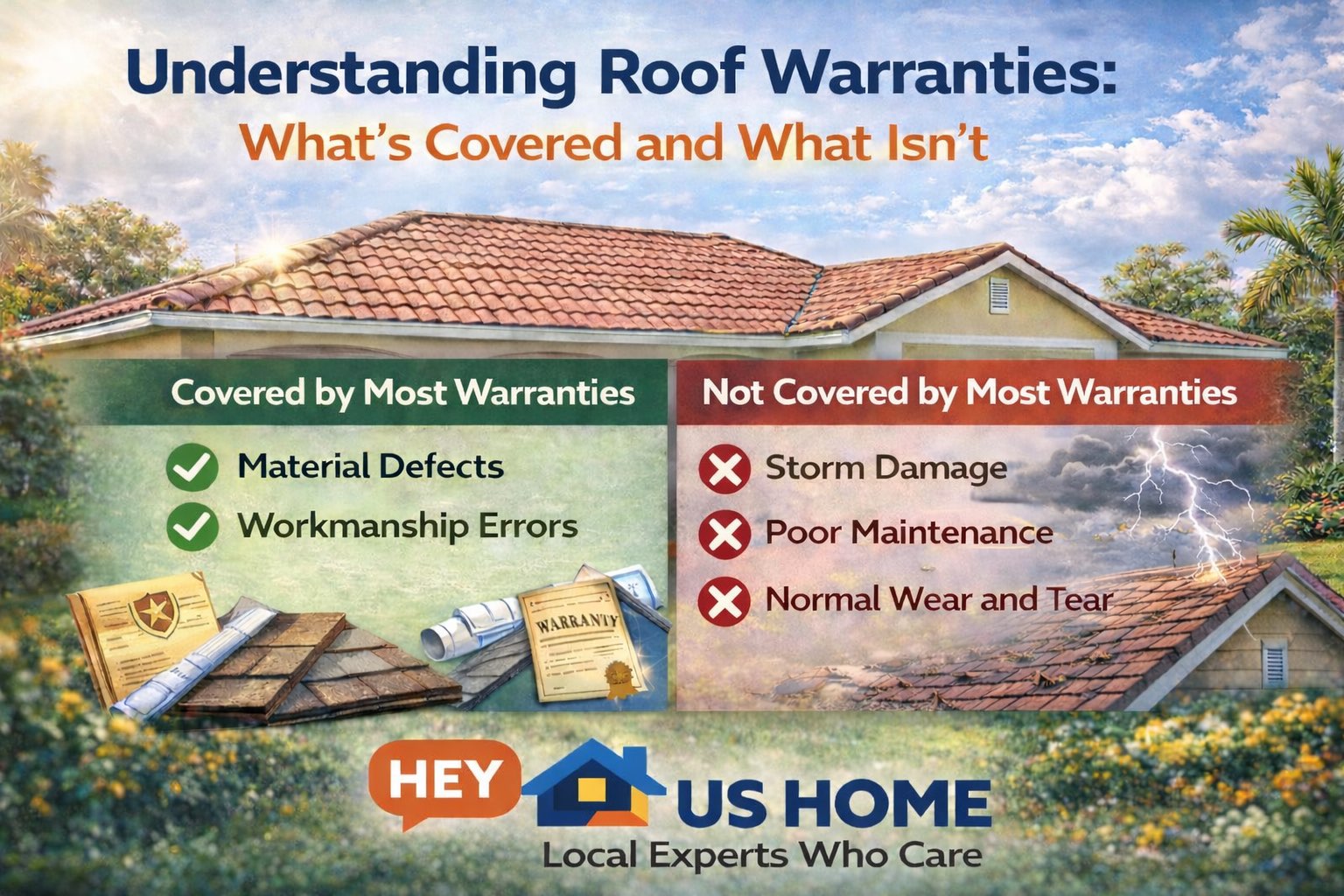
✅ Manufacturing defects in roofing materials
✅ Workmanship-related issues (if covered by your contractor)
✅ Certain roofing system components depending on the product and warranty level
In other words, warranties usually protect you against defects or installation-related problems—not every roofing issue that may happen over the years.
What Roof Warranties Usually Don’t Cover
This is where confusion happens most often. Common exclusions include:
❌ Storm or hurricane damage
Florida storms are powerful, but most roof warranties don’t cover damage caused by wind, hail, or flying debris. That’s typically handled through homeowners insurance.
❌ Normal wear and tear
Roofs age over time. Warranty coverage generally does not apply to expected deterioration.
❌ Poor maintenance
Clogged gutters, heavy roof debris, and ignored algae growth can contribute to water damage and premature wear, which can lead to denied claims.
❌ Improper attic ventilation
Ventilation matters in Tampa’s heat. If poor ventilation causes excessive heat buildup or moisture problems, some warranties may not apply.
❌ Unapproved repairs or modifications
DIY repairs, pressure washing, or work performed by an unqualified contractor can potentially void or reduce coverage.
Roof + Solar: Extra Warranty Considerations
Homeowners often ask whether solar panels affect roof warranties. The truth is: solar doesn’t automatically void a warranty, but installation quality matters.
Problems can occur if solar mounting is done incorrectly—especially if flashing or sealing is compromised. That’s one reason many homeowners prefer working with one team that understands both systems.
At US Roofing and Solar, we take a long-term approach to roof integrity, so your roofing system and solar system work together, not against each other.
How to Protect Your Roof Warranty
Want to keep your warranty strong? Here are a few practical steps:
Save your warranty documents and installation paperwork
Schedule roof inspections after major storms
Keep gutters clean and drainage flowing properly
Avoid pressure washing your roof
Don’t ignore small leaks or staining
Call a professional before adding new roof penetrations or equipment
Get Clarity Before You Sign
A roof warranty should protect your home and your budget—not confuse you with fine print.
If you’re considering roof repair or replacement in the Tampa area, US Roofing and Solar can walk you through your warranty options, explain what’s included, and help you make the right choice for long-term protection.
For more information about Roofers in Tampa or Solar Contractors in Tampa, contact Hey US Home. Follow us on our Google Business Profile, Facebook, and Instagram.
This content is intended for informational/general reading purposes only and is not for professional or legal advice.
